Customer Retention: Key to Sustainable Growth
Customer Retention, Long-term Relationships, Business Growth, Customer Loyalty Strategies
Customer Retention & Long-Term Client Relationships: The Real Engine of Sustainable Growth
At Groundwork Growth Co., we see the same pattern every week: businesses chasing the next new lead while quietly leaking customers out the back door. The truth is simple and uncomfortable—Customer Retention and long-term relationships do far more for your Business Growth than any short-lived spike in attention. When you build systems that keep customers coming back, your marketing stops feeling like a constant uphill battle and starts compounding over time.
Turn One-Time Buyers into Lifetime Clients
Build retention systems that keep customers coming back again and again
Why Customer Retention Beats Constant Customer Acquisition
You’ve likely heard the stat: acquiring a new customer costs about five times more than retaining an existing one. That’s not a cute marketing quote—it’s a hard reality that shows up in your ad spend, sales time, and operational stress. Every new customer usually requires:
Paid ads or sponsorships to get their attention
Content, social media, and emails to build trust from zero
Sales calls, proposals, or onboarding to close the first deal
In contrast, a retained customer already knows you, trusts you, and understands how you work. The cost to win their next purchase is dramatically lower—often just a timely email, a reminder, or a small nudge through your CRM or automation. This is why, as a marketing agency, Groundwork Growth Co. builds retention and follow-up systems into every growth plan we create. Without retention, you’re paying full price for the same revenue over and over again.
📌 Key Takeaway: If you’re not actively investing in Customer Retention, you’re effectively choosing to pay five times more for the same dollar of revenue.
The Power of the Third Visit: Where Loyalty Really Starts
One of the most overlooked metrics in Customer Loyalty Strategies is not just getting a first sale—but getting a customer to come back two more times. Research shows that once a customer reaches their third visit, the likelihood they’ll return again jumps to an incredible 96%. That third interaction is where a casual buyer starts to become a habit-driven, long-term customer.
Think about that for a moment. Most businesses obsess over the first transaction—discounts, flashy offers, and one-time promotions—yet ignore the critical window between visit one and visit three. At Groundwork Growth Co., we encourage clients to design their marketing systems around this “third-visit milestone.” Instead of asking, “How do we get more first-time customers?” we ask, “What’s our plan to move every new customer toward that third visit as smoothly as possible?”
💡 Pro Tip: Map a simple three-visit journey for your business. What does a perfect first, second, and third experience look like—and how will you follow up between each one?
Why Loyal Customers Are Worth More Than Any Ad Campaign
When you prioritize Customer Retention, the math of your business starts to change in your favor. Loyal customers don’t just come back more often—they fundamentally reshape your revenue, your brand, and your growth trajectory. Here’s how:
1. Loyal customers spend more over time
A returning customer already trusts your business. That trust lowers their hesitation to buy higher-ticket services, add-ons, or premium options. They’re more open to bundles, memberships, and long-term contracts because they’ve seen you deliver. Over a year or two, the total value of that relationship can be many times higher than the first sale alone.
2. Loyal customers refer more business than any ad
Happy, long-term clients naturally talk. They refer friends, colleagues, and family. They tag you on social media. They forward your emails. Each loyal customer becomes a quiet growth channel on their own. Unlike ads, these referrals come in pre-trusted and far more likely to buy—and they cost you almost nothing beyond continuing to serve your existing customers well.
3. Loyal customers become brand advocates you can’t buy
A brand advocate is more than a satisfied buyer. They defend you in conversations, leave detailed reviews, share their before-and-after stories, and show up to support your launches. You can’t purchase that kind of credibility with “flashy marketing.” It’s earned through consistent delivery, strong follow-up, and genuine Long-term Relationships built over time.
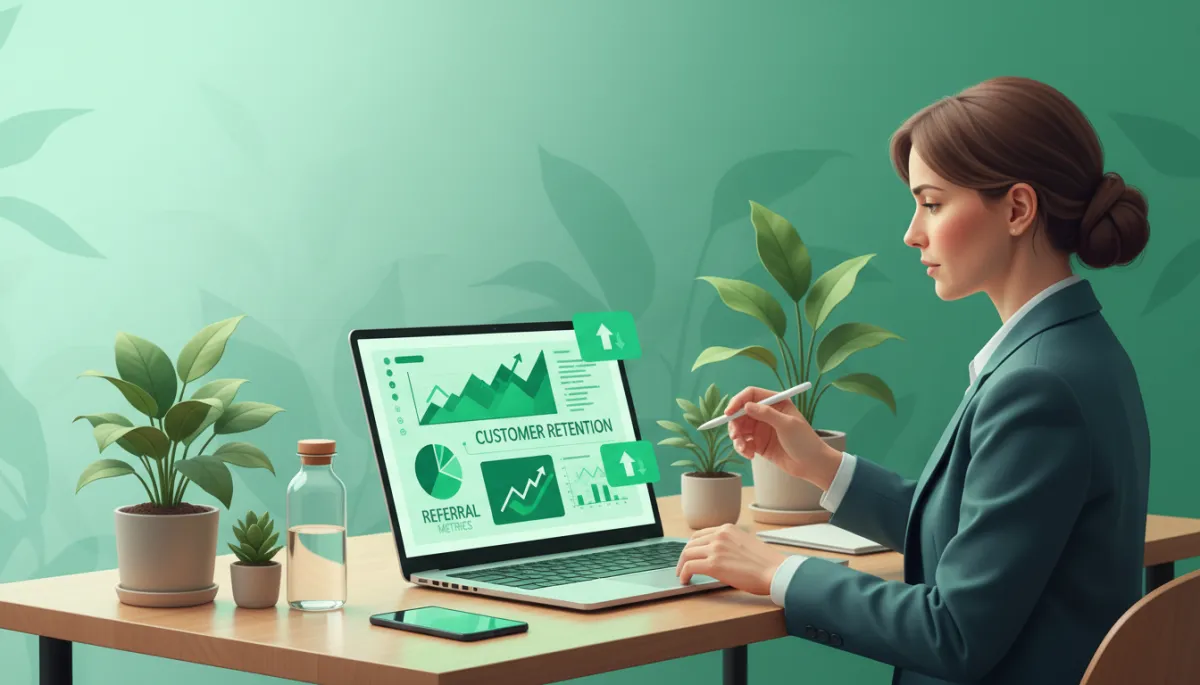
When retention improves, revenue grows without matching increases in ad spend.
Retention Over Flash: How Real Businesses Win with Loyalty
The businesses that quietly dominate their markets rarely have the loudest ads. They don’t rely on constant gimmicks, deep discounts, or viral stunts. Instead, they build Customer Loyalty Strategies around a simple truth: it’s better to keep a customer for years than impress them once. At Groundwork Growth Co., we call this a “systems-first” approach to growth—where retention is built into the foundation, not bolted on later.
Flashy marketing might get you attention, but attention is not the same as loyalty. A slick campaign can produce a spike in leads, but if your website, CRM, and follow-up systems aren’t designed to nurture Long-term Relationships, those leads will simply fade away. Real Business Growth comes from pairing visibility with the ability to turn first-time buyers into repeat, long-term clients.
📌 Key Takeaway: Sustainable growth comes from being reliably good, not occasionally impressive. Retention turns “good once” into “great for years.”
Three Core Strategies for Building Long-Term Client Relationships
Long-term Relationships don’t happen by accident. They’re built intentionally through systems and habits. Here are three pillars Groundwork Growth Co. focuses on when helping local and online businesses strengthen Customer Retention and loyalty.
1. Delivering Consistent, Compounding Value
Customers stay where they feel they consistently get more value than they pay for. That doesn’t always mean lowering your prices. It means raising the perceived and actual value of every interaction. Ask yourself:
Do customers clearly understand the results you’re delivering, or do you assume they just “see it”?
Are you educating them—through emails, resources, or quick check-ins—on how to get more from what they’ve already bought?
Do you proactively solve problems before they become complaints?
Simple examples of delivering more value:
A local service business sending seasonal reminders and tips so customers never have to remember when to book again.
An online store including a short “how to get the most from your purchase” guide after checkout, plus a follow-up email a week later.
💡 Pro Tip: Value isn’t only in what you sell—it’s also in how clearly you communicate, educate, and support your customers after they buy.
2. Strong Follow-Up: The Backbone of Customer Retention
Most businesses lose customers not because they did something wrong, but because they simply went silent. Life gets busy, inboxes fill up, and your brand slowly slips from view. This is why strong follow-up is at the heart of every retention system we build at Groundwork Growth Co.
Effective follow-up is:
Timely: Reaching out when it matters—right after purchase, before renewals, ahead of key seasons, or when usage drops off.
Relevant: Tailored to what the customer bought, what they care about, or what stage they’re in.
Systemized: Powered by a CRM and automation, so it happens whether you remember or not.
Examples of strong follow-up in action:
A thank-you email within 24 hours of purchase, with a clear next step or bonus resource.
A 7-day check-in asking how things are going and inviting questions or feedback.
A 30-day reminder with a relevant offer, refill, upgrade, or booking link to encourage that crucial second or third visit.
💡 Pro Tip: If your follow-up depends on memory or sticky notes, it’s not a system. Use a CRM and automation to protect your future revenue.
3. Personal Experiences That Make Customers Feel Seen
People stay loyal where they feel recognized, not just processed. Personalization doesn’t have to be complicated or creepy. Often, it’s about simple, human touches backed by good data and consistent processes. This is where your CRM becomes a relationship tool, not just a database.
Use names and purchase history in your emails to make offers feel relevant, not generic.
Track preferences—services used, styles chosen, sizes, or timelines—and reference them in future recommendations.
Send simple “we appreciate you” notes on anniversaries, milestones, or after a series of repeat visits.
For local businesses, small gestures—remembering a regular’s usual order, greeting them by name, or acknowledging their loyalty—can mean more than any discount. For online businesses, personalization through email segments, tailored product suggestions, or custom onboarding flows can create the same sense of being known and valued.
📌 Key Takeaway: Long-term Relationships grow when customers feel like people, not line items. Use data to support human connection, not replace it.
Turning Retention into a Practical Growth System
Customer Retention is not a slogan—it’s a system. To make it real inside your business, you need clear steps, consistent tools, and measurable outcomes. Here’s a practical way to start, the same way we approach it at Groundwork Growth Co. when we build retention-focused marketing systems for clients.
Step 1: Map your customer journey to the third visit
Take a single sheet of paper and outline:
What happens from first contact to first purchase?
What happens after the first purchase that naturally leads to a second?
What specific offer, reminder, or experience encourages that crucial third visit?
If there’s nothing in place today between those visits, you’ve just identified one of your biggest growth opportunities.
Step 2: Put a CRM and automation at the center
You can’t manage what you can’t see. A simple CRM, connected to your website, forms, and booking tools, lets you:
Track who is a first-time, second-time, or repeat customer
Trigger automated emails or texts based on behavior and timing
Measure retention rates, referral sources, and repeat revenue over time
At Groundwork Growth Co., we specialize in building these systems so your follow-up, reviews, and reminders run reliably in the background—freeing you to focus on serving customers while your retention engine keeps running.
Step 3: Measure what matters for retention and loyalty
To turn Customer Retention into a competitive advantage, track a few simple metrics:
Percentage of customers who come back for a second and third visit
Average revenue per customer over 6–12 months, not just per transaction
Number of referrals or reviews generated by existing customers
These numbers tell you if your Long-term Relationships are getting stronger, staying flat, or quietly slipping. Once you see them, you can improve them—with better follow-up, clearer value, and more personal experiences.
From One-Time Buyers to Long-Term Clients: Your Next Move
Sustainable Business Growth doesn’t come from chasing every new marketing trend. It comes from doing the fundamentals of Customer Retention and Long-term Relationships exceptionally well, over and over again. When you:
Recognize that acquiring new customers costs five times more than keeping the ones you have,
Design your systems to drive every new customer toward that critical third visit—where the chance of return jumps to 96%,
And invest in delivering value, strong follow-up, and personal experiences,
you stop relying on “flashy marketing” to save each quarter and start building a customer base that stays, spends more, and brings others with them. That’s the kind of growth that feels stable, predictable, and worth building a business around.
📌 Key Takeaway: Loyalty is not luck. It’s the result of clear systems, consistent delivery, and intentional follow-up.
Ready to Build a Retention-First Growth System?
If you’re a local or online business owner who’s tired of starting from scratch every month—new ads, new offers, new promotions—then it’s time to shift your focus. Instead of only asking, “How do we get more leads?” start asking, “How do we keep more of the customers we already have?”
At Groundwork Growth Co., we help you do exactly that. We build marketing systems, websites, CRM setups, automation, review strategies, and follow-up flows designed to:
Get your business found by the right people
Turn visibility into leads and leads into paying customers
And most importantly, retain those customers through strong follow-up and real systems
If you’re ready to prioritize Customer Retention, build Long-term Relationships, and create a more stable path to Business Growth, we’d like to show you what’s possible for your specific situation.
💡 Next Step: Book a discovery call with Groundwork Growth Co. and let’s map out a retention-first growth plan tailored to your business here.

