Fix Lead Loss: Boost Conversion with CRM Systems
Lead Conversion, Lead Management, CRM Systems
5 Reasons You’re Losing Leads After They Contact You (And How to Fix It)
As a senior software engineer working with Groundwork Growth Co., I see the same pattern across local and online businesses: you’re getting leads, but your Lead Conversion rate is far below what it should be. The problem usually isn’t your ad spend or your traffic. It’s what happens in the hours and days after a lead contacts you. In this article, we’ll break down five common failure points—and the practical systems, from CRM Systems to Marketing Automation, that fix them for good.
“The odds of qualifying a lead drop by over 400% when you wait more than 10 minutes to respond compared to contacting them within 5 minutes.”
— Lead Response Management Study, MIT & InsideSales.com
1. Slow Response Time Is Killing Your Lead Conversion
When someone fills out a form, calls, or messages your business, they’re usually comparing you with at least two or three competitors. If your Response Time is measured in hours instead of minutes, you’re losing deals before you even speak to the prospect. Industry data consistently shows that contacting a lead within five minutes can multiply your conversion odds several times over compared to waiting an hour or more. Research from Harvard Business Review found that companies that tried to contact leads within an hour were nearly 7 times more likely to qualify them than those that waited longer.
📌 Real-World Example: A local HVAC company we worked with at Groundwork Growth Co. was taking 2–3 hours to return web inquiries and closing less than 10% of them. After we implemented instant SMS acknowledgments plus a 10-minute callback rule with automated tasks in their CRM, their booked appointments from the same lead volume increased by just over 40% in the first 60 days.
From a systems perspective, this is a routing and automation problem, not a motivation problem. You cannot rely on a human to “see the email” and respond fast every time. You need a process where every inbound lead automatically triggers a confirmation and a follow-up task in your CRM Systems.
💡 Pro Tip: Aim for an instant automated reply plus a human follow-up within 5–15 minutes during business hours.
Practical Fix: Missed Call Text-Back and Instant Acknowledgment
One of the simplest wins Groundwork Growth Co. deploys is a missed call text-back system. If a lead calls and no one can pick up, an automatic SMS goes out within seconds, acknowledging the call and offering the next step (booking a time, replying with a question, or filling out a short form). This protects your Lead Conversion rate even when your team is busy or after hours.
// Pseudo-code for a missed call text-back flow

function onMissedCall(call) {
    const phone = call.fromNumber;

    const message =
        "Hey, we just missed your call. " +
        "This is Groundwork Growth Co. Reply here with your question " +
        "or tap to book a time: https://yourbookinglink.com";

    smsProvider.send({
        to: phone,
        body: message
    });

    crm.createTask({
        contactPhone: phone,
        type: "Follow-up Call",
        dueInMinutes: 15,
        description: "Call back missed lead ASAP."
    });
}
Whether you implement this via Twilio, your phone system, or built-in tools in a Marketing Automation platform, the principle is the same: no inbound lead should ever feel ignored.
“Companies that excel at lead nurturing generate 50% more sales-ready leads at a 33% lower cost.”
— Forrester Research, B2B Lead Nurturing Benchmark
2. You Don’t Have Effective Lead Tracking or a Real CRM Pipeline
Many businesses still run their Lead Management out of email inboxes, spreadsheets, or sticky notes. That works until it doesn’t—and “doesn’t” usually means you forget to follow up, lose context, or have no idea where a deal stands. A proper CRM pipeline turns a chaotic flow of inquiries into a visual, trackable process with clear stages: New Lead, Contacted, Qualified, Proposal Sent, Won, Lost, and so on.
📌 Case Study Snapshot: A regional home services franchise came to Groundwork Growth Co. with leads scattered across three inboxes and a shared spreadsheet. They were closing roughly 1 in 8 estimates. After moving everything into a single CRM pipeline with required stages, owners, and next steps, they could finally see bottlenecks. Within three months, their close rate improved to 1 in 5—without increasing ad spend—simply because fewer leads slipped through the cracks.
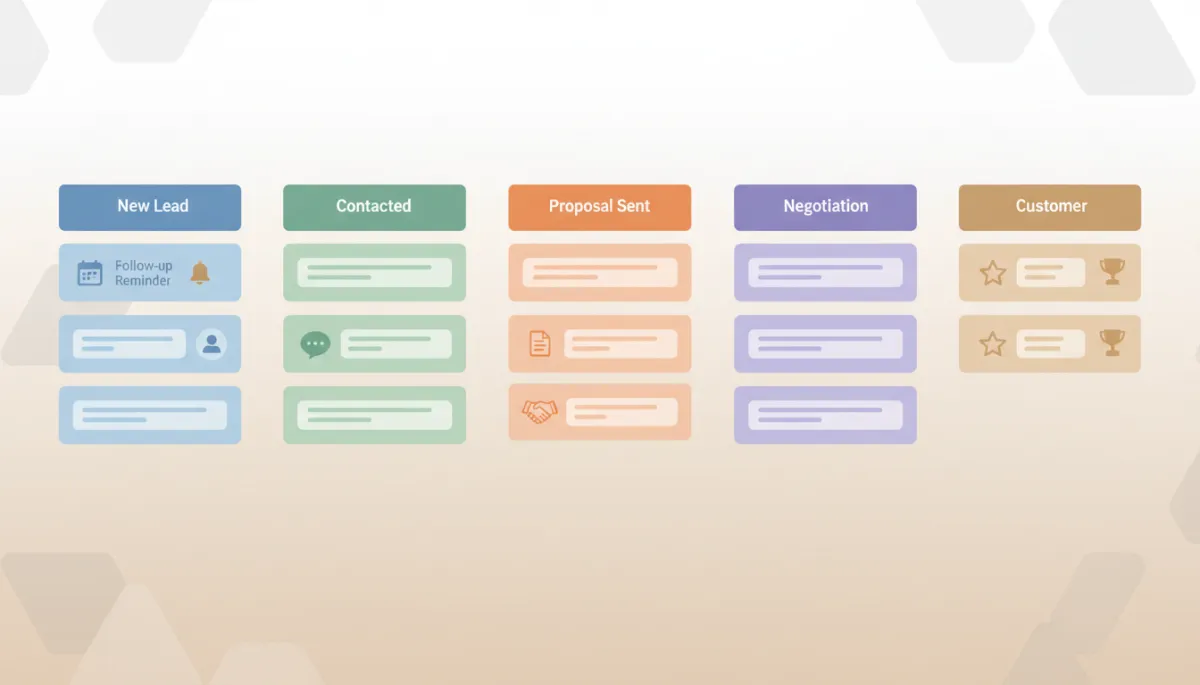
A clear CRM pipeline turns random inquiries into a predictable conversion process.
At Groundwork Growth Co., we design CRM Systems so every new lead automatically lands in a pipeline with an owner, a due date, and a next action. From there, your team can move cards between stages and trigger automated messages or tasks based on status changes.
// Example: creating a new lead and pipeline stage via a CRM API

async function onNewFormSubmission(formData) {
    const contact = await crm.createContact({
        name: formData.name,
        email: formData.email,
        phone: formData.phone
    });

    const deal = await crm.createDeal({
        contactId: contact.id,
        title: `New Inquiry - ${formData.serviceType}`,
        value: formData.estimatedValue,
        stage: "New Lead"
    });

    await crm.createTask({
        dealId: deal.id,
        type: "Call",
        dueInMinutes: 30,
        description: "Call new lead and qualify."
    });
}
The goal is simple: no lead exists outside of your Lead Management system, and no deal sits in a stage without a defined next step.
“Only about 25% of leads are ready to buy right away, but as much as 50% will be ready sometime in the future.”
— Gleanster Research, Lead Nurturing Report
3. Your Follow-Up Isn’t Persistent or Strategic Enough
Most businesses follow up once or twice, then assume the lead is “not interested.” In reality, your prospect is busy, distracted, or waiting for the right moment. Strong Customer Follow-up means you stay professionally persistent without becoming annoying. That usually requires a mix of channels (email, SMS, phone) and a planned strategic follow-up sequence over days or weeks.
📌 Real-World Example: An online coaching business we support used to send a single email after someone requested a discovery call and then move on. When we built a 7-touch, multi-channel nurture sequence—email, SMS, and one manual call task—show-up rates for booked calls increased from 55% to 78%, and monthly revenue grew by just under 30% with the same marketing budget.
💡 Pro Tip: Design follow-up sequences in advance instead of improvising each message. Let the system handle the timing; your team focuses on high-quality conversations.
Practical Fix: Automated, Multi-Step Follow-Up Sequences
With modern Marketing Automation, you can build a follow-up journey that triggers when a lead enters a specific pipeline stage. For example, a “New Lead – Consultation” sequence might send an instant email, a same-day SMS, a next-day reminder, and a final check-in several days later—automatically paused if the lead replies or books a time.
// Pseudo workflow for a strategic follow-up sequence

workflow "Consultation Lead Nurture" {
    trigger: deal.stage == "New Lead";

    step 1:
        action: sendEmail(contact.email, "Thanks for reaching out", templateWelcome);
        delay: 0 minutes;

    step 2:
        action: sendSms(contact.phone, "Got your request. Here’s my calendar: ...");
        delay: 30 minutes;

    step 3:
        condition: if !deal.hasAppointment();
        action: sendEmail(contact.email, "Quick reminder to book your consult", templateReminder1);
        delay: 1 day;

    step 4:
        condition: if !deal.hasAppointment();
        action: createTask(ownerId, "Call lead - no booking yet", dueInHours = 4);
        delay: 2 days;
}
This kind of systematic, persistent follow-up dramatically improves Lead Conversion because it removes guesswork and inconsistency from your team’s day-to-day actions.
“On average, 80% of sales require five or more follow-ups, yet many teams stop after one or two touches.”
— National Sales Executive Association (NSEA) summary, widely cited in sales research
4. You Ignore Old Leads Instead of Reactivating Them
Another major leak in Lead Management is the graveyard of “old” or “cold” leads sitting in your database. These are people who once raised their hand, asked for a quote, or booked a call—but never converted. Many businesses treat them as dead, but in practice, they can be some of your easiest wins if you run structured reactivating old leads campaigns.
📌 Case Study Snapshot: A small landscaping company had over 1,200 “no response” and “lost on price” estimates from the previous two years. Groundwork Growth Co. helped them segment leads by service type and send a simple reactivation sequence with a seasonal promotion and updated portfolio photos. Over four weeks, they reactivated 9% of those leads into paying jobs—enough to fill their schedule for the next two months.
From a technical standpoint, this is where segmentation and automation shine. You can filter leads by last activity date, pipeline stage, or outcome (e.g., “Lost – Price” or “No Response”) and then enroll them into tailored reactivation sequences with a fresh offer, updated case studies, or time-limited incentives.
// Reactivate leads that went cold more than 90 days ago

async function reactivateColdLeads() {
    const coldLeads = await crm.queryDeals({
        stage: "Qualified",
        lastActivityBeforeDays: 90,
        status: "Open"
    });

    for (const deal of coldLeads) {
        await automation.enrollInWorkflow({
            dealId: deal.id,
            workflowName: "Cold Lead Reactivation"
        });
    }
}
Groundwork Growth Co. routinely sees businesses generate “found revenue” just by reactivating old leads through structured campaigns like this. You already paid to acquire their attention—now let your systems give them a second chance to convert.
“Winning back past prospects or customers can be significantly more profitable than acquiring new ones, because you’ve already paid the acquisition cost and built initial awareness.”
— Harvard Business Review, Customer Win-Back Strategies
5. You Don’t Have a Real Customer Retention System
Converting a lead once is only half the game. Without strong customer retention systems, you’re constantly starting from zero, chasing new leads instead of building long-term value. Retention is where your CRM Systems and Marketing Automation can work together to create ongoing touchpoints: onboarding sequences, review requests, renewal reminders, upsell offers, and check-ins at key milestones.
📌 Real-World Example: A subscription-based fitness studio was losing nearly 1 in 3 members within their first 90 days. Groundwork Growth Co. implemented an onboarding and retention pipeline: welcome emails, progress check-ins at 30/60/90 days, automated review requests, and “we miss you” nudges when attendance dropped. Within six months, early churn dropped by 18 percentage points, and lifetime value per member increased accordingly.
Technically, retention is just another pipeline—except the stages are “New Customer,” “Onboarded,” “Engaged,” “At-Risk,” and “Churned.” With the right tags and triggers, you can detect when a customer hasn’t engaged recently and automatically send helpful content or prompt your team to reach out personally.
// Flag at-risk customers based on inactivity and create a retention task

async function flagAtRiskCustomers() {
    const customers = await crm.queryContacts({
        segment: "Active Customers",
        lastEngagementBeforeDays: 45
    });

    for (const customer of customers) {
        await crm.addTag(customer.id, "At-Risk");

        await crm.createTask({
            contactId: customer.id,
            type: "Retention Outreach",
            dueInDays: 1,
            description: "Check in, offer help, and request feedback."
        });
    }
}
This is how Groundwork Growth Co. helps clients shift from one-time transactions to repeat revenue: by embedding retention logic directly into their Lead Management and customer pipelines.
“Increasing customer retention rates by just 5% can boost profits by 25% to 95%.”
— Bain & Company, Prescription for Cutting Costs
Bringing It All Together: Systems That Turn Attention into Customers
When you look at these five issues—slow Response Time, weak tracking, inconsistent Customer Follow-up, neglected old leads, and missing retention—you’ll notice a common thread: they are all systems problems. They’re not solved by trying harder; they’re solved by designing better workflows inside your CRM Systems and Marketing Automation tools.
Quick response: implement missed call text-back, instant email/SMS acknowledgments, and short SLAs for human follow-up.
Effective lead tracking: move all leads into clear CRM pipelines with owners, stages, and next actions.
Persistent follow-up: design strategic follow-up sequences that run automatically while your team focuses on live conversations.
Reactivating old leads: segment and enroll cold leads into targeted campaigns instead of letting them sit idle.
Customer retention systems: treat customers as an ongoing pipeline with proactive outreach and value-driven touchpoints.
📌 Key Takeaway: The businesses that win aren’t just louder; they’re more consistent. They respond faster, track better, and follow up longer—because their systems make it easy.
How Groundwork Growth Co. Can Help You Fix the Leaks
As a systems-first marketing agency, Groundwork Growth Co. focuses on more than just getting you attention. We help you build the foundations to capture, track, and convert that attention into revenue—through websites, reviews, CRM Systems, automation, and strong Customer Follow-up and retention processes. Our role is to translate practical business needs into reliable technical workflows that your team can trust every day.
If you’re ready to stop losing leads after they contact you and start operating with clear, predictable Lead Management systems, the next step is straightforward: let’s map your current process, identify the leaks, and design the automations and pipelines that close them.
Book a discovery call with Groundwork Growth Co. and we’ll walk you through what a complete, systems-driven Lead Conversion and retention setup looks like for your business—so every lead that reaches out is handled quickly, tracked properly, followed up with persistently, reactivated when needed, and nurtured into a long-term customer.

